
DyAllergy
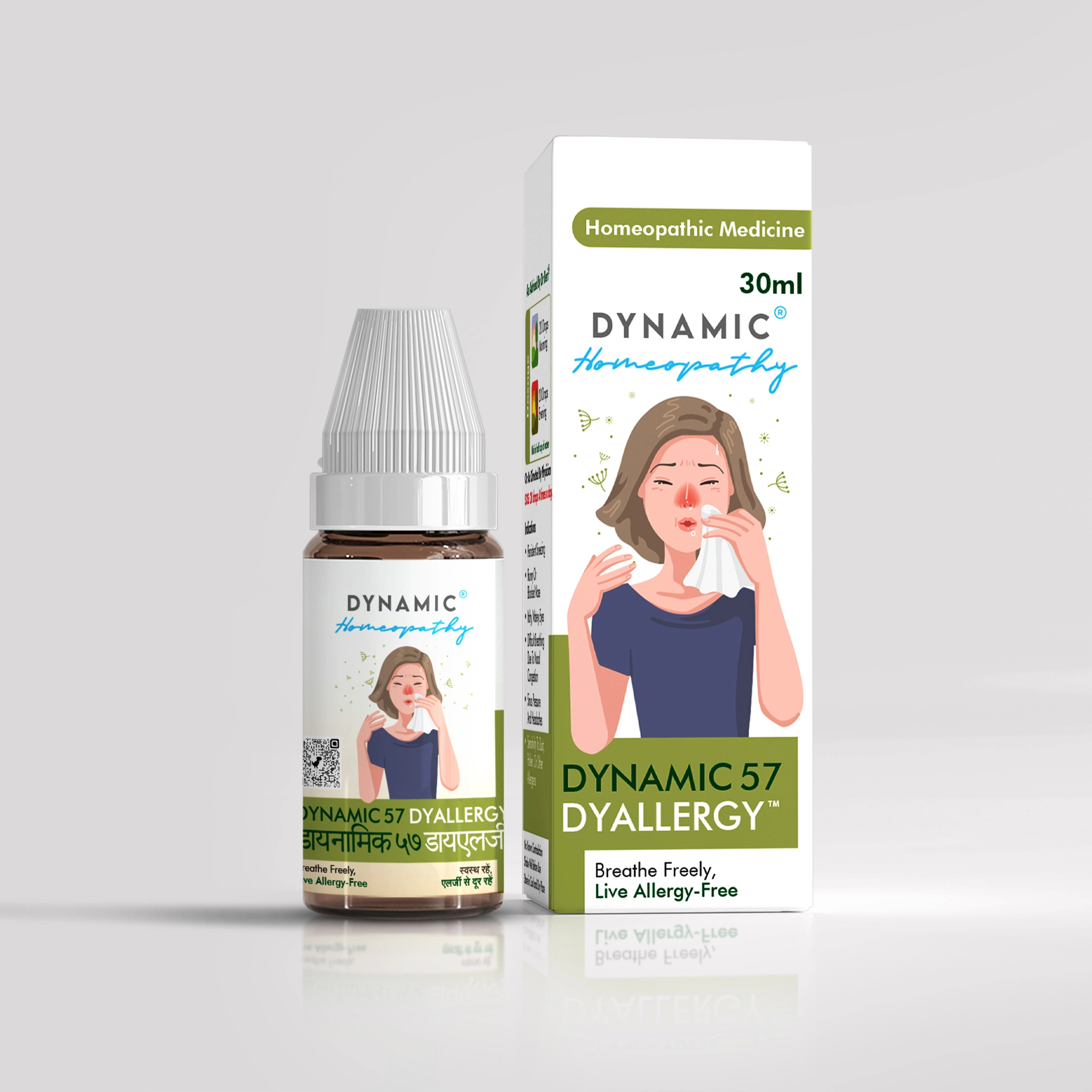
Your natural shield against allergic rhinitis and hay fever
Dynamic 57 DyAllergy is a homeopathic remedy formulated to provide effective relief from symptoms associated with allergic rhinitis, hay fever, and seasonal allergies. It works gently yet powerfully to alleviate discomfort and restore balance naturally.
Key Benefits:
- Relieves sneezing and runny nose caused by allergies.
- Soothes itchy and watery eyes due to hay fever.
- Reduces nasal congestion and eases breathing difficulties.
- Addresses allergic reactions to pollen and dust.
- Alleviates symptoms such as sinus headaches, fatigue, and more.
Key Ingredients:
- Luffa Operculata, Lemna Minor, Teucrium Marum Verum
- Aconitum Napellus, Hydrastis Canadensis, Eupatorium Perfoliatum
- Galphimia Glauca
Dosage:
- 20 drops in the morning.
- 20 drops in the evening.
- SOS: 20 drops up to 4 times a day, as needed.
FAQs
Dynamic 57 – DyAllergy is a specially formulated homeopathic medicine designed to help relieve symptoms associated with allergic rhinitis, hay fever, and seasonal allergies. It supports the body’s natural healing response and helps reduce nasal irritation, sneezing, a runny nose, and watery eyes.
Allergic rhinitis is an allergic reaction that occurs when the immune system overreacts to allergens such as pollen, dust mites, pet dander, or mold. It commonly causes sneezing, nasal congestion, a runny nose, itchy eyes, and throat irritation.
Allergic rhinitis develops when the immune system mistakenly identifies harmless airborne substances as harmful and triggers an allergic reaction. This immune response leads to inflammation of the nasal lining, resulting in symptoms such as sneezing, nasal congestion, a runny nose, and itching. Common triggers include pollen from trees, grasses, and weeds, house dust mites found in bedding and carpets, pet dander from cats and dogs, mold spores that thrive in damp environments, and environmental irritants such as cigarette smoke, air pollution, strong perfumes, and chemical fumes, all of which can trigger or worsen symptoms.
Allergic rhinitis presents with repeated episodes of sneezing, a runny or blocked nose, itching of the nose, eyes, throat, or roof of the mouth, watery or red eyes, postnasal drip, nasal congestion, and a reduced sense of smell. Some individuals may also experience coughing, facial pressure, disturbed sleep, fatigue, and difficulty concentrating, particularly when symptoms are persistent or severe. Symptoms may vary in intensity depending on the individual’s sensitivity and the level of exposure to the triggering allergens.
Dynamic 57 DyAllergy is formulated to help relieve symptoms of allergic rhinitis, including sneezing, nasal congestion, a runny nose, and itching. It supports natural symptom relief and overall respiratory comfort.
Homeopathy follows an individualized approach based on a person’s symptoms and overall health. Dynamic 57 DyAllergy is designed to support the management of allergic rhinitis and seasonal allergy symptoms. For persistent or severe allergies, consult a qualified healthcare professional.
Managing chronic allergic rhinitis often involves identifying and avoiding allergy triggers, maintaining good indoor air quality, following healthy lifestyle practices, and using appropriate treatment as advised by a healthcare professional. Homeopathic treatment may be considered as part of an individualized care plan.
The duration depends on the cause. Seasonal allergic rhinitis may last for weeks during pollen season, while perennial allergic rhinitis can persist throughout the year if exposure to allergens continues.
The first step is to reduce exposure to known allergens. Keeping windows closed during high pollen seasons, using air purifiers, staying hydrated, and following an appropriate treatment plan may help relieve symptoms more effectively.
Yes. Dynamic 57 DyAllergy is formulated to help support individuals experiencing seasonal allergies, including hay fever symptoms such as sneezing, itchy eyes, a runny nose, and nasal congestion.
Anyone can develop allergic rhinitis, but it is more common in people with a family history of allergies, asthma, or eczema, and in those who are regularly exposed to environmental allergens.